First impressions are almost entirely visual—within seconds an interviewer forms a judgment. Wearing the right outfit doesn’t just show professionalism; it signals respect for the role and helps you feel more confident.
When it comes to dressing for job interviews men often overthink the process, stressing over whether a tie is too bold or if a blazer is too stiff. The truth is, your attire speaks before you even open your mouth. It tells the hiring manager that you understand the company culture, take the opportunity seriously, and pay attention to detail.
Whether you are stepping into a high-rise corporate office, a bustling tech startup, or a hands-on trade environment, this guide covers exactly what to wear to an interview men need to know. We’ll break down industry-specific interview outfits for men, share universal rules that apply to every candidate, and offer budget-friendly strategies to build a winning wardrobe. Let’s get you dressed for success.
1. Understand the Company Culture Before You Dress
Before picking out a suit for interview men often assume they need to wear, do some reconnaissance. The golden rule of interview attire is to dress one step above the company’s everyday dress code. But how do you figure out what that everyday code is?
Start with digital research. Check the company’s website and social media pages (Instagram and LinkedIn are goldmines for candid office photos). Read reviews on Glassdoor (our recommended external resource for company research), where current and former employees often mention the work environment and dress code. If you are working with a recruiter, simply ask them! A quick “What is the typical office dress code?” shows you are proactive and detail-oriented.
Interpreting Common Dress Codes
- Formal / Business Professional: Suits and ties. Common in law, finance, and executive roles.
- Business Casual: Slacks, button-downs, blazers, usually no tie. The standard for many modern corporate offices.
- Smart Casual: Dark jeans, high-quality t-shirts or polos, casual blazers. Typical for tech and creative agencies.
- Casual / Uniform: T-shirts, sneakers, or specific workwear. Common in retail, trades, or hospitality.
When to Overdress vs. Underdress
When in doubt, it is always better to be slightly overdressed than underdressed. Showing up in a sharp blazer to a casual startup shows initiative and respect for the opportunity. Conversely, showing up in a graphic tee and sneakers to a law firm shows poor judgment. Aim for the “one step up” rule: if the office wears jeans and t-shirts, you wear dark jeans and a blazer. If they wear khakis and polos, you wear slacks and a button-down.
2. Core Interview Outfits by Industry
Figuring out how to dress for interview men corporate leaders expect is very different from dressing for a creative agency. Here is a breakdown of the best interview outfit ideas men can use across three major career paths.
Corporate / Finance / Law (Business Professional)
- The Vibe: Traditional, authoritative, meticulous, and respectful of hierarchy.
- Fit & Fabric: Opt for a worsted wool suit in navy or charcoal. Avoid solid black, as it can look too severe or imply you are heading to a funeral or a prom. Ensure the jacket shoulders sit flat, the sleeves end right at the wrist bone (showing a half-inch of shirt cuff), and the trousers have a slight “break” (fold) at the shoe.
- Colors: Stick to light blue or crisp white shirts. Ties should be silk, in solid colors or subtle patterns (like navy with a micro-dot or a understated burgundy stripe).
- Accessories & Grooming: A conservative analog watch with a leather strap, a simple tie bar, and highly polished leather shoes.
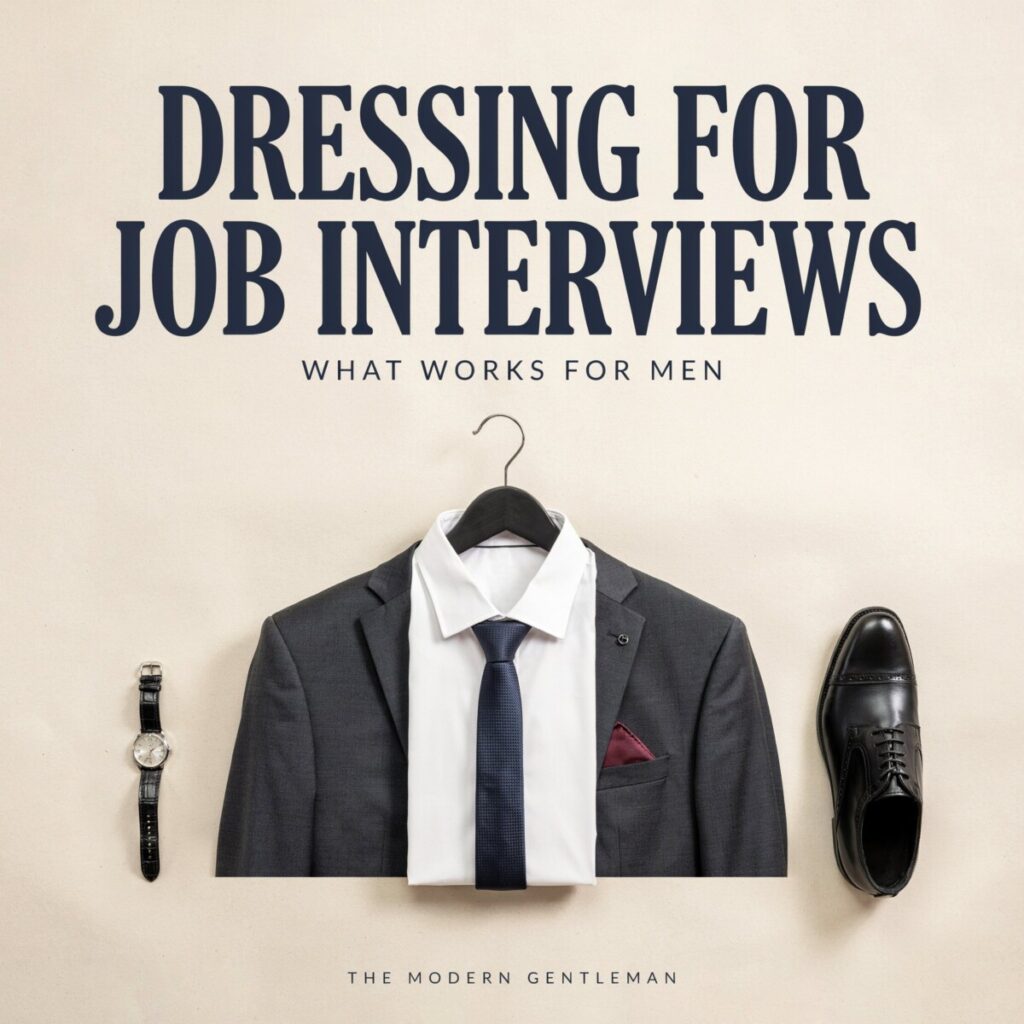
- Example Outfit: A tailored charcoal wool suit, a crisp white spread-collar dress shirt, a navy silk tie, black leather cap-toe oxfords, and a matching black leather belt.
Creative / Tech / Startups (Smart Casual)
- The Vibe: Innovative, approachable, and put-together without being stuffy.
- Fit & Fabric: A business casual interview men look thrives on texture and layering. Think cotton chinos, merino wool sweaters, or unstructured cotton blazers. Avoid stiff, heavily padded suit jackets, which can look out of place in a beanbag-chair-filled office.
- Colors: Earth tones, navy, olive, and soft pastels work beautifully. You can introduce subtle patterns like windowpane checks or gingham. Avoid loud, distracting logos or overly flashy streetwear.
- Footwear: Clean, minimalist leather sneakers or suede chukka boots are excellent interview shoes men can wear in the tech space.
- Example Outfit: A navy unstructured cotton blazer over a high-quality, well-fitted light grey crewneck t-shirt or polo, paired with olive cotton chinos and pristine white leather sneakers.
Trades / Retail / Hospitality (Practical & Clean)
- The Vibe: Capable, safety-conscious, reliable, and ready to work.
- Fit & Fabric: For a casual interview outfit men in the trades need, durability and cleanliness are paramount. Avoid overly baggy clothes that could snag on machinery or look sloppy. Choose fabrics that resist wrinkles and stains.
- Colors & PPE: Dark denim or heavy-duty work pants (like Dickies or Carhartt) that are entirely free of rips, fading, or stains. If the role requires Personal Protective Equipment (PPE) like steel-toe boots or high-visibility gear, wearing clean, well-maintained PPE to the interview shows you deeply understand the job’s physical demands.
- Footwear: Scuff-free work boots or slip-resistant shoes (crucial for hospitality and culinary roles).
- Example Outfit: Dark, unripped straight-leg jeans, a freshly laundered and well-fitting polo shirt (tucked in), a clean canvas work jacket, and polished, scuff-free work boots.
3. Universal Rules for Professional Attire Men Can Rely On
Regardless of whether you are aiming for a corner office or a workshop floor, certain rules of professional attire men should never break.
Fit Trumps Price
A $150 suit tailored perfectly to your body will always look infinitely better than a $1,500 designer suit that fits poorly. Find a good local tailor; they are a job-seeker’s best friend. Hemming pants, taking in the waist of a shirt, and shortening jacket sleeves are inexpensive adjustments (often under $50 total) that make your interview wardrobe staples men own look custom-made.
Grooming is Non-Negotiable
Interview grooming tips men should follow include getting a fresh haircut about three to five days before the interview (this gives it time to settle and look natural). Trim your nails, clean underneath them, and manage your facial hair. If you have a beard, line it up with a razor and apply beard oil. If you are clean-shaven, shave the morning of the interview to avoid shadow.
Keep Accessories Modest
A simple leather belt that matches your shoes, a conservative watch, and perhaps a wedding band are all you need. Avoid flashy jewelry, oversized belt buckles, novelty ties, or sunglasses perched on your head. You want the interviewer focusing on your resume, not your accessories.
Neutral Colors Rule
Navy, charcoal, grey, olive, and white are your safest bets. They convey reliability, calmness, and professionalism. Save the neon colors and loud, aggressive patterns for your weekend wardrobe.
Minimal Fragrance
Skip the cologne entirely, or apply just one subtle spray to your chest. Many people are sensitive or allergic to strong scents, and an enclosed interview room can make a heavy fragrance overwhelming and distracting. When in doubt, let the scent of fresh laundry and soap be your only fragrance.
Well-Pressed Clothing
Wrinkles scream “I just rolled out of bed and don’t care.” Take the time to iron or steam your garments the night before. Pay special attention to the collar of your shirt and the front panels of your jacket.
4. Small Details That Make a Big Difference
The devil is in the details. Here are the subtle interview clothing tips men often overlook, but hiring managers silently notice:
- Lint and Tags: Use a lint roller right before you walk into the building. Double-check that you’ve removed the exterior brand tags from new suit sleeves or jacket lapels.
- Socks Matter: If you sit down and your pant leg rides up, your socks will show. Wear dark, over-the-calf dress socks with suits so no bare leg is visible. Never wear white athletic socks with dress shoes.
- Tattoos and Piercings: While workplace norms are rapidly evolving, conservative industries (like finance, law, or healthcare) still often prefer ink and extra piercings to be covered. Research the specific company culture. When in doubt, wear long sleeves and keep facial jewelry to a minimum.
- Phone Etiquette: Your phone should be completely powered off—not just on silent or vibrate—and tucked away in a briefcase, bag, or deep coat pocket.
- Bring a Portfolio: Carrying a sleek padfolio or leather portfolio with extra copies of your resume, a notepad, and a pen elevates your look from “candidate” to “professional.” It also gives your hands something to hold, reducing nervous fidgeting.
- Posture: Stand tall, pull your shoulders back, and offer a firm (but not crushing) handshake. The most expensive suit in the world won’t help you if you slouch and avoid eye contact.
5. Budget-Friendly and Sustainable Options
You do not need to drain your savings account to secure affordable interview outfits men can be proud of. Smart shopping and sustainable choices can yield a highly professional look on a tight budget.
- Thrift and Consignment: High-end menswear is frequently donated to thrift stores or sold on consignment apps like Poshmark, Depop, or eBay. You can often find premium wool suits and designer shoes for a fraction of the retail price.
- Renting: Services like The Black Tux or local formalwear shops allow you to rent high-quality suits for a few days. This is a highly cost-effective strategy if you only interview occasionally and don’t want to maintain a suit year-round.
- Buy Off-Season: Buy your winter wool suits in July and your linen blends in January. Retailers heavily discount seasonal items to clear floor space.
- Capsule Wardrobe Example: Build a versatile base. Buy one navy blazer, two pairs of chinos (khaki and navy), and three high-quality button-down shirts (white, light blue, and subtle stripe). Mix and match these interview wardrobe staples men need for dozens of distinct business casual interview men looks without buying a full suit.
- Care Tips: Extend the life of your garments by using wooden hangers (which hold the shape of the shoulders), letting shoes rest for 24 hours between wears with cedar shoe trees to absorb moisture, and spot-cleaning minor stains instead of dry-cleaning after every single wear.
(Editor’s Note: For more on building a timeless, cost-effective closet, see our internal guide to [wardrobe staples for men].)
6. Final Preparation and Day-Of Tips
The morning of the interview should be entirely stress-free. Your only focus should be reviewing your notes and getting into a confident headspace.
- Prep the Night Before: Lay out your entire outfit, including socks, belt, tie, and accessories. Iron your shirt and polish your shoes while you are watching TV the night before.
- Traveling to the Interview: If you are traveling via public transit, walking, or biking, consider wearing a smart overcoat to protect your suit from the elements. If it’s raining, bring a professional, sturdy umbrella rather than a flimsy plastic one that will blow inside out.
- Arrival Time: Aim to arrive exactly 10 to 15 minutes early. Arriving 30 minutes early can pressure the hiring manager and make the receptionist uncomfortable; arriving even one minute late is an automatic red flag.
- The Bathroom Check: Ten minutes before your interview, stop in the restroom. Check your teeth for food, adjust your tie, ensure your shirt is still tucked, and use the mirror to check your posture and take a deep breath.
- Handling Spills: Carry a small stain-remover pen (like a Tide To Go) in your bag or pocket just in case of a rogue coffee splash on your way to the building.
- Overdressed or Underdressed? If you arrive and realize you are drastically overdressed, confidently remove your tie, unbutton your jacket, and roll up your sleeves. If you are underdressed, rely on impeccable posture, a warm smile, active listening, and excellent eye contact to project professionalism. Your character can easily outshine a casual outfit.
Conclusion & Printable Interview Checklist
Dressing well for an interview isn’t about vanity or pretending to be someone you aren’t; it’s about removing visual distractions so the hiring manager can focus entirely on your skills, experience, and personality. By respecting the company culture, investing in proper fit, and paying attention to grooming, you set the stage for a winning conversation.
Your Printable Day-Of Checklist
- [ ] Outfit laid out, steamed/ironed, and wrinkle-free the night before.
- [ ] Shoes polished, wiped down, and scuff-free.
- [ ] Nails trimmed, filed, and hands clean.
- [ ] Hair and facial hair neatly groomed and lined up.
- [ ] Fragrance is minimal, subtle, or entirely skipped.
- [ ] Phone fully powered off and stowed away in a bag.
- [ ] Padfolio packed with extra resumes, a notepad, and a working pen.
- [ ] Belt leather matches shoe leather perfectly.
- [ ] Arrived at the building 10–15 minutes early.
Call to Action: What is your go-to interview outfit? Do you swear by the classic navy suit, or do you prefer a smart-casual blazer and jeans combo? Share your favorite combinations, post a photo, or ask a styling question in the comments below! And don’t forget to sign up for our newsletter for more career advice, style tips, and job-hunting strategies delivered straight to your inbox.
Frequently Asked Questions
Can I wear jeans to an interview?
Only if the company has a verified casual dress code (like a tech startup, a creative agency, or a trade role). If you do wear jeans, ensure they are dark-wash, entirely unripped, free of fading, and paired with a blazer, a tucked-in button-down, and clean leather shoes or premium sneakers.
What if I have visible tattoos or piercings?
Always research the specific company culture. In conservative fields like corporate law, banking, or traditional healthcare, it is still best practice to cover tattoos with long sleeves and remove facial jewelry. In creative, tech, or progressive fields, they are usually perfectly acceptable and can even serve as a great conversation starter.
How formal should I be for a video interview?
Treat video interview attire men wear exactly like an in-person interview. Wear full professional attire from head to toe (including pants and proper shoes!) in case you need to stand up unexpectedly to grab a document or close a door. Ensure your lighting is facing you (not behind you) and your background is tidy and uncluttered.
