
You Deserve Better Than Shivering Through Another Commute
Picture this: It’s mid-January, 7:15 AM, and you’re standing on the platform waiting for the train. The wind cuts right through that thin puffer you bought on sale last November. Your shoulders are hunched, your hands are jammed into pockets that aren’t deep enough, and you’re making a silent promise — the same one you made last year — that you’ll finally buy a real coat.
Sound familiar?
Here’s the thing about winter outerwear for men: most guys treat it as an afterthought. They grab whatever’s on the clearance rack, wear it for a season or two, watch it pill, sag, or lose its insulation, and then repeat the cycle. It’s the definition of false economy.
This guide is here to break that cycle. We’re going to walk you through the best winter jackets for men that actually deserve a spot in your closet — pieces that deliver serious warmth, look sharp from the office to the weekend, and hold up for years, not months. Whether you need a polished wool overcoat for client meetings or a technical parka that laughs at sub-zero mornings, we’ve got you covered.
Let’s build a winter wardrobe that works as hard as you do.
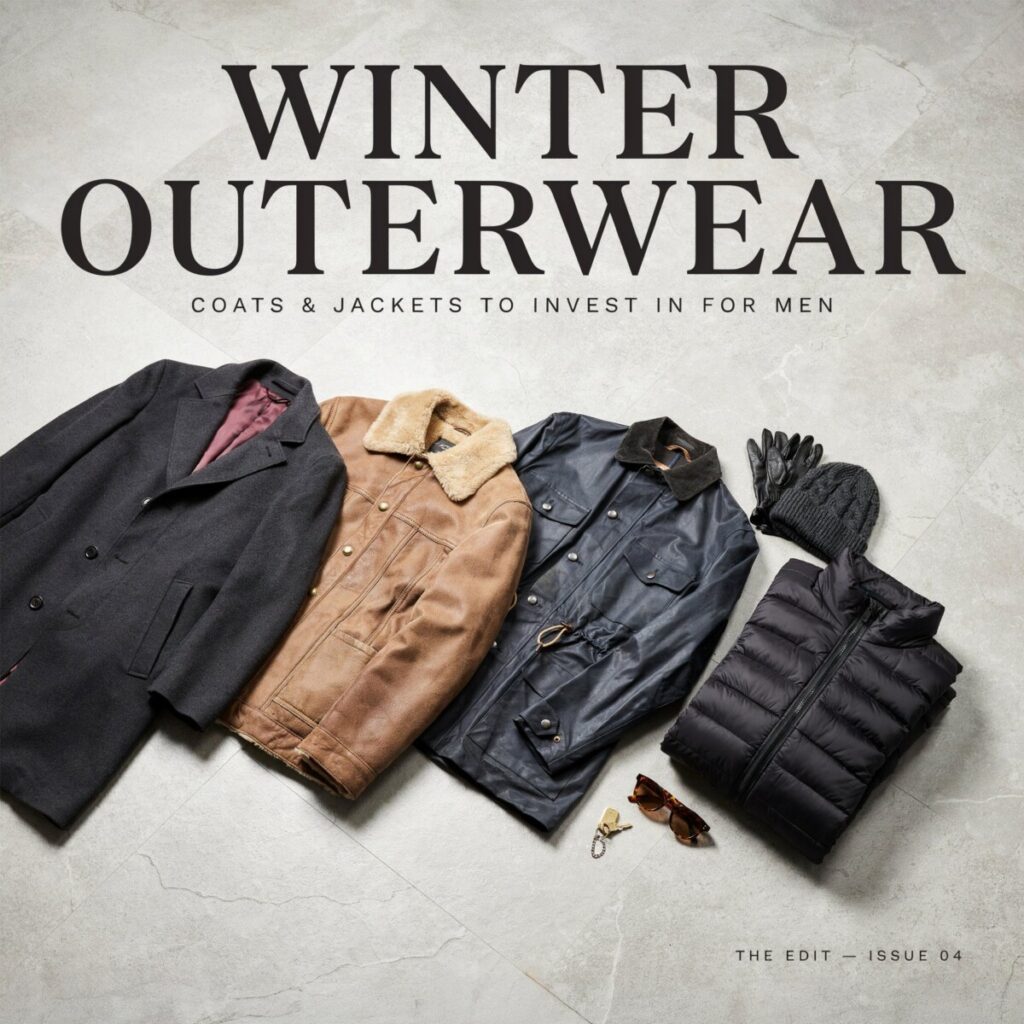
Why Investing in Winter Outerwear Actually Matters
The Price-Per-Wear Reality Check
Let’s talk numbers for a second. A $120 fast-fashion coat that lasts two winters costs you $60 per year. A $450 investment coat that lasts ten years? That’s $45 per year — and it looks and performs better every single season. That’s the magic of price-per-wear, and it’s the single best argument for buying quality winter outerwear.
When you invest in a well-made men’s winter coat, you’re not just buying warmth. You’re buying garment longevity. You’re buying the confidence of walking into a room knowing your outerwear looks intentional, not disposable. And increasingly, you’re buying into sustainability — fewer coats in landfills, fewer resources burned on manufacturing replacements.
Trend Purchases vs. Investment Pieces
There’s nothing wrong with a trendy jacket here and there. But your core cold weather outerwear — the coats you reach for 80% of the time — should be timeless menswear outerwear. Think classic silhouettes, versatile colors like navy, charcoal, camel, and black, and fabrics that age gracefully rather than fall apart.
An investment coat earns its keep through three pillars: durability (quality construction and materials), versatility (works across occasions and outfits), and performance (keeps you warm, dry, and comfortable). Nail those three, and you’ll never dread winter mornings again.
Fit and Care: The Hidden Multipliers
Even a $700 coat becomes a mediocre coat if the fit is wrong. Proper tailoring — taking in the waist, adjusting sleeve length — transforms a good coat into a great one. And consistent care (more on that later) can literally double or triple a coat’s lifespan. Investment pieces reward attention.
Key Features to Look for in Men’s Winter Coats
Before we get into specific styles, here’s your cheat sheet for evaluating any winter jacket. Think of these as non-negotiable checkpoints.
Insulation: Down vs. Synthetic Fill
Down insulation (from ducks or geese) offers the best warmth-to-weight ratio available. The metric to watch is insulation fill power — a measure of loft and trapping ability. For cold climates, look for a down jacket men’s styles rated between 600 and 900 fill power. Higher fill power means warmer and lighter, but also pricier. A 700-fill-power down jacket is the sweet spot for most guys.
Synthetic fill (Primaloft, ThermoBall, etc.) is heavier but retains warmth when wet — a huge advantage in rainy or humid winters. If you’re in a wet climate, synthetic-insulated jackets men’s options often outperform down.
Shell Fabric
The outer shell is your first line of defense. Common options include:
- Wool and wool blends: Naturally warm, breathable, and elegant. Ideal for overcoats and topcoats.
- Nylon and ripstop: Lightweight, durable, and commonly used in puffers and parkas.
- Gore-Tex and waterproof membranes: The gold standard for waterproof winter jacket construction. Windproof, breathable, and reliably dry.
- Waxed cotton: Heritage fabric that’s naturally water-resistant and develops a beautiful patina over time.
- Polyester: Budget-friendly and functional, though less breathable than natural fibers.
Waterproofing and DWR Finish
Look for a DWR (Durable Water Repellent) finish on any coat you plan to wear in rain or snow. DWR causes water to bead and roll off the shell. For serious wet weather, you want fully seam-sealed construction — meaning every stitched seam is taped to prevent water ingress.
Breathability
Warmth without breathability equals sweat. Breathable fabrics allow moisture vapor to escape so you stay dry from the inside, too. This is especially important for active commuters or anyone layering heavily.
Weight-to-Warmth Ratio
A great winter coat keeps you warm without making you feel like you’re wearing a sleeping bag. High-fill-power down and modern synthetic insulations achieve this beautifully. For urban use, aim for medium-weight insulation; for extreme cold, go heavier.
Hood Design
Hooded vs. hoodless is both a style and function call. A hood adds warmth and weather protection but can look bulky under a blazer. Many parkas offer removable or stowable hoods — a smart compromise. If you choose a hooded jacket, look for adjustable drawcords and insulated lining.
Length and Coverage
Coat length matters enormously for warmth. A hip-length bomber leaves your thighs exposed; a knee-length parka protects your entire lower body. Consider:
- Cropped/Bomber: Casual, stylish, best for mild cold.
- Hip-length: Versatile everyday length.
- Mid-thigh: Great balance of warmth and mobility.
- Knee-length or longer: Maximum coverage for severe cold.
Understanding the parka vs coat distinction helps here — parkas are typically longer, hooded, and more insulated, while coats (overcoats, topcoats) are tailored and dressier.
Pockets, Hardware, and Details
Quality zippers (YKK, Riri), sturdy snap buttons, and reinforced pocket linings are signs of thoughtful manufacturing. Look for internal pockets for valuables, storm flaps over front zippers, and articulated sleeves for better mobility and arm articulation.
Fit and Layering Room
Your winter coat needs to accommodate layering — at minimum a sweater or fleece underneath. When trying on, wear the thickest layer you’d realistically wear beneath it. There should be enough room through the chest and shoulders without looking boxy. Tailoring and fit go hand-in-hand: even off-the-rack investment coats men’s options can be adjusted by a good tailor for a custom feel.
Color and Versatility
Stick to versatile colors for your primary investment piece. Navy, charcoal, camel, and black pair with virtually everything in a capsule wardrobe. Save bold colors and patterns for secondary jackets.
Manufacturing Details and Warranty
Ethical manufacturing and transparent supply chains matter to an increasing number of buyers. Look for brands that offer lifetime warranties or robust repair programs — it’s a strong signal they stand behind their products. Repairability is a hallmark of true investment pieces.
The Must-Have Investment Coats and Jackets
Now for the main event. Here are the winter outerwear categories — with specific guidance — that every man should consider for a long-term wardrobe.
1. The Classic Wool Overcoat / Topcoat
Why invest: A wool overcoat men’s style is the undisputed king of timeless style. It transitions seamlessly from boardroom to dinner to weekend outings, and a quality wool coat can last 15–20 years with proper care.
Who it’s for: Professionals, anyone who dresses business-casual or above, and men who want one coat that handles most formal and semi-formal winter occasions.
What to look for: Single-breasted designs in camel, charcoal, or navy offer maximum versatility. Look for at least 70% wool content (higher is better), a half-canvas or full-canvas construction, and a length that falls at or just above the knee. A notch lapel is the most adaptable collar style.
Typical price range: $250–$700+ for quality.
Styling tips: Layer over a suit for work, or pair with dark denim and Chelsea boots for smart-casual weekends. A charcoal overcoat is arguably the most versatile single outerwear purchase a man can make.
Pros: Elegant, versatile, extremely long-lasting, breathable natural fiber.
Cons: Not waterproof (though wool resists light rain), heavier than technical options, requires dry cleaning.
Care pointers: Dry clean sparingly (1–2 times per season), brush with a garment brush after each wear, store on a wide wooden hanger.
2. The Quilted Down Jacket
Why invest: A high-fill-power down jacket men’s option is the ultimate lightweight warmth solution. It compresses for travel, delivers exceptional insulation, and — in a classic quilted or baffled design — looks clean and modern.
Who it’s for: Urban commuters, frequent travelers, and anyone who prioritizes warmth without bulk.
What to look for: 650–800 fill power, a DWR-treated shell, clean horizontal or diagonal baffles (which look sharper than puffy, unstructured designs), and a trim but layering-friendly fit. Packable down jacket men’s styles that stuff into their own pocket are ideal for travel.
Typical price range: $200–$550.
Styling tips: A slim, dark-colored down jacket pairs beautifully with chinos and sneakers for a casual look, or layer it under an overcoat on brutally cold days for a double-insulation system.
Pros: Exceptional warmth-to-weight, packable, long-lasting with proper care, versatile styling.
Cons: Loses insulation when wet (unless treated), not dressy enough for formal events, requires specific washing methods.
Care pointers: Wash with a down-specific detergent, tumble dry on low with tennis balls to restore loft, never store compressed long-term.
3. The Technical Parka
Why invest: When winter means serious cold, wind, and snow, a parka is your best friend. Longer length, heavy insulation, and a protective hood make it the most comprehensive warm coats for winter available.
Who it’s for: Men in cold climates (think Midwest, Northeast, mountain regions), outdoor commuters, and anyone who prioritizes maximum protection.
What to look for: Waterproof or highly water-resistant shell (Gore-Tex or equivalent), sealed seams, insulated hood (with or without faux fur trim — a style choice), a mid-thigh to knee length, adjustable cuffs, and a storm flap over the front zipper. Look for a parka vs coat design that includes internal waist cinching for a less boxy silhouette.
Typical price range: $300–$700+.
Styling tips: Parkas lean casual, so pair with rugged boots, dark jeans, and a chunky knit sweater. A navy or olive parka is more interesting than basic black.
Pros: Maximum warmth and weather protection, great for severe cold, practical pocket layouts, long coverage.
Cons: Bulky, not suitable for formal occasions, can be too warm for mild winter days, heavier to carry.
Care pointers: Follow manufacturer wash instructions carefully, reproof DWR coating annually, ensure thorough drying to prevent mildew.
4. The Insulated Shell / 3-in-1 Jacket
Why invest: A 3-in-1 system — typically a waterproof outer shell with a zip-in insulated liner — gives you three jackets in one. Shell only for rain, liner only for cool days, combined for full winter protection. It’s the definition of versatile outerwear.
Who it’s for: Men who travel frequently, face variable weather, or want maximum function from a single purchase.
What to look for: A shell with sealed seams, breathable membrane, and pit zips for ventilation. The liner should be independently wearable and warm enough on its own. Quality zippers and attachment hardware are critical — this is the system’s weak point on cheap versions.
Typical price range: $250–$600.
Styling tips: These lean technical and sporty. Best with casual and athleisure outfits rather than tailored clothing. Choose muted colors (navy, slate, olive) to keep it looking refined.
Pros: Extremely versatile, adaptable to changing conditions, good value (three garments in one).
Cons: Neither piece may excel on its own compared to dedicated garments, can look technical/casual, more zippers = more potential failure points.
Care pointers: Wash shell and liner separately per instructions, reproof shell DWR regularly, check zipper attachment points for wear.
5. The Field Jacket / Waxed Cotton Coat
Why invest: A field jacket or waxed cotton coat brings heritage style and genuine weather resistance. These jackets look better with age — the cotton softens, the wax develops a unique patina, and the garment becomes unmistakably yours.
Who it’s for: Men who favor a rugged, casual aesthetic, enjoy outdoor activities, or want a character-rich jacket with genuine function.
What to look for: Waxed cotton or heavy cotton-canvas shell, a warm flannel or quilted lining (some offer removable liners), brass hardware, multiple cargo or bellows pockets, and a mid-thigh length. Brands like Barbour, Filson, and Belstaff have set the standard here.
Typical price range: $250–$500+.
Styling tips: Pair with selvedge denim, flannel shirts, and leather boots for a classic Americana or British country look. These jackets work beautifully in a capsule wardrobe built around earth tones.
Pros: Ages beautifully, naturally water-resistant, rugged and durable, distinct heritage aesthetic.
Cons: Heavier than modern technical fabrics, requires re-waxing periodically, less insulated than dedicated winter jackets, not suitable for formal wear.
Care pointers: Re-wax annually or biannually (most brands sell wax tins), spot clean rather than machine wash, store in a cool, dry place.
6. The Insulated Bomber or Leather Jacket
Why invest: Not every winter day calls for a full-length parka. An insulated bomber or shearling-lined leather jacket delivers style-forward warmth for milder cold and social occasions where looking sharp matters.
Who it’s for: Style-conscious men in moderate climates, date nights, evenings out, and anyone who wants a shorter, more fashion-forward winter option.
What to look for: Genuine leather or high-quality suede shell, insulated or shearling lining, ribbed cuffs and hem to trap heat, and a clean silhouette. For synthetic options, look for a technical bomber with PrimaLoft insulation and a water-resistant shell.
Typical price range: $200–$700+ (leather skews higher).
Styling tips: A black or brown leather bomber over a turtleneck and dark jeans is an effortlessly cool winter look. Keep the rest of the outfit streamlined — the jacket is the statement.
Pros: Stylish, versatile for evenings and social events, leather is naturally windproof, ages beautifully.
Cons: Shorter length means less coverage, not ideal for extreme cold or heavy rain, leather requires conditioning, expensive at the quality end.
Care pointers: Condition leather 2–3 times per season, use a suede protector spray if applicable, store on a padded hanger, keep away from direct heat sources.
7. The Hybrid Jacket
Why invest: Hybrid jackets combine different materials and insulation types in strategic zones — insulated panels in the core for warmth, stretchy softshell panels in the arms and sides for mobility. It’s modern outerwear engineering at its best.
Who it’s for: Active men, cyclists, hikers, or anyone who needs warmth and freedom of movement in their daily commute or weekend activities.
What to look for: Insulated front and back panels (down or synthetic), breathable and stretchy side panels and sleeves, a DWR-treated exterior, and articulated patterning for arm articulation and mobility. Athletic fit should allow full range of motion.
Typical price range: $150–$400.
Styling tips: Hybrids lean sporty and modern. Pair with technical pants, sneakers, or hiking boots. They’re ideal layering pieces under a shell in truly severe conditions.
Pros: Excellent mobility, strategic warmth, lightweight, great for active use, modern aesthetic.
Cons: Less warm than a full-insulation parka, sporty look won’t suit formal settings, more complex construction can mean more failure points.
Care pointers: Follow care labels closely (mixed fabrics can be tricky), avoid fabric softeners on technical panels, air dry when possible.
How to Choose Based on Climate and Lifestyle
Not every coat works for every situation. Here’s a quick decision guide to narrow your options.
Urban Commuter (Mild to Moderate Cold)
Best picks: Wool overcoat, quilted down jacket, or insulated bomber.
You need something that looks sharp on the train, transitions to the office, and handles 30–50°F. A navy wool overcoat is hard to beat here.
Severe Cold / Sub-Zero Climates
Best picks: Technical parka, heavy down jacket, or a 3-in-1 system.
When temperatures drop below 10°F, you need maximum insulation, full coverage, and wind protection. Prioritize fill power, length, and sealed construction.
Wet and Rainy Winters
Best picks: Gore-Tex parka, waxed cotton field jacket, or insulated shell with sealed seams.
Rain demands waterproofing over pure insulation. Look for sealed seams, DWR finish, and synthetic insulation (which performs when wet).
Frequent Traveler
Best picks: Packable down jacket, 3-in-1 system, or lightweight insulated shell.
You need compressibility, versatility, and layering capability. A packable down jacket stuffed in your carry-on, combined with a shell, covers most scenarios.
Style-Focused / Formal Dressing
Best picks: Wool overcoat, topcoat, or cashmere-blend coat.
When appearance is paramount, natural fibers and tailored silhouettes win. Camel, charcoal, and navy remain the most versatile colors.
Pro combo for cold and wet climates: Layer a Gore-Tex shell over a merino wool base and a quilted down liner. This three-layer system adapts to changing conditions throughout the day and provides both waterproofing and serious insulation.
Care, Repair, and Getting the Most Value from Your Investment
You’ve spent the money. Now protect it. Here’s how to make your winter outerwear last a decade or more.
Cleaning Fundamentals
- Wool coats: Dry clean once or twice per season — over-cleaning degrades fibers. Brush after every wear with a natural-bristle garment brush to remove dust and restore the nap.
- Down jackets: Wash with a down-specific detergent (like Nikwax Down Wash) every 1–2 seasons. Tumble dry on low with clean tennis balls to restore loft. Never dry-clean down — the chemicals strip natural oils.
- Technical shells: Wash per manufacturer instructions with a technical fabric cleaner. Avoid standard detergents and fabric softeners, which degrade DWR coatings.
- Waxed cotton: Spot clean only. Never machine wash. Re-wax when the fabric stops beading water.
Storage
Store off-season coats clean and fully dry. Use wide, shaped wooden hangers for structured coats (overcoats, blazers). Store down jackets uncompressed — either hung or loosely folded in a breathable cotton bag. Never store in plastic.
Repairs and Warranties
A stuck zipper, a torn seam, or a broken snap doesn’t mean a coat is done. Find a reliable local tailor or alterations shop for minor repairs. Many premium brands (Patagonia, Arc’teryx, Canada Goose) offer repair programs or lifetime warranties. Before buying, check the brand’s repair and warranty policy — it’s a strong indicator of how much they believe in their product.
The Price-Per-Wear Calculation
A $500 coat worn 120 days a year over 10 years = $0.42 per wear. That’s cheaper than your morning coffee. Reframing cost this way makes investment pieces feel not just reasonable, but smart.
Quick Buying Checklist + Wrap-Up
The right winter coat isn’t about one “best” option — it’s about the best option for your climate, lifestyle, body type, and wardrobe. Whether you choose a timeless wool overcoat, a technical parka, or a rugged waxed cotton field jacket, the principles remain the same: buy quality, prioritize fit, and take care of what you own.
Before You Buy, Confirm:
- ✅ Insulation type and rating match your climate (down fill power or synthetic weight)
- ✅ Shell fabric is appropriate for your typical weather (waterproof, windproof, breathable)
- ✅ Seams are sealed if you’ll face rain or snow
- ✅ DWR finish is present on technical outerwear
- ✅ Fit accommodates your thickest typical layer without looking oversized
- ✅ Color is versatile (navy, charcoal, camel, or black for primary coats)
- ✅ Length provides adequate coverage for your coldest days
- ✅ Hardware (zippers, snaps) is quality brand-name (YKK, Riri)
- ✅ Brand offers a warranty or repair program
- ✅ You’ve calculated price-per-wear and feel good about the investment
Your move: What’s your go-to winter coat? Drop a comment below with your favorite piece or share this guide with a friend who’s still shivering in that three-year-old fast-fashion puffer. Stay warm, stay sharp.
