You open your closet. It’s stuffed — hangers tangled, fabrics crammed shoulder-to-shoulder — and yet somehow, you’ve got nothing to wear. It’s the first warm Saturday of spring, and you’re pulling on the same heavy hoodie you wore in February. A friend texts you about rooftop drinks tonight, and you realize every shirt you own is either wrinkled, stained, or just… not quite right for the weather. Sound familiar?
Here’s the truth most men learn the hard way: a full closet and a functional wardrobe are two very different things. The difference between looking put-together and looking lost isn’t about spending more money — it’s about having the right pieces at the right time of year.
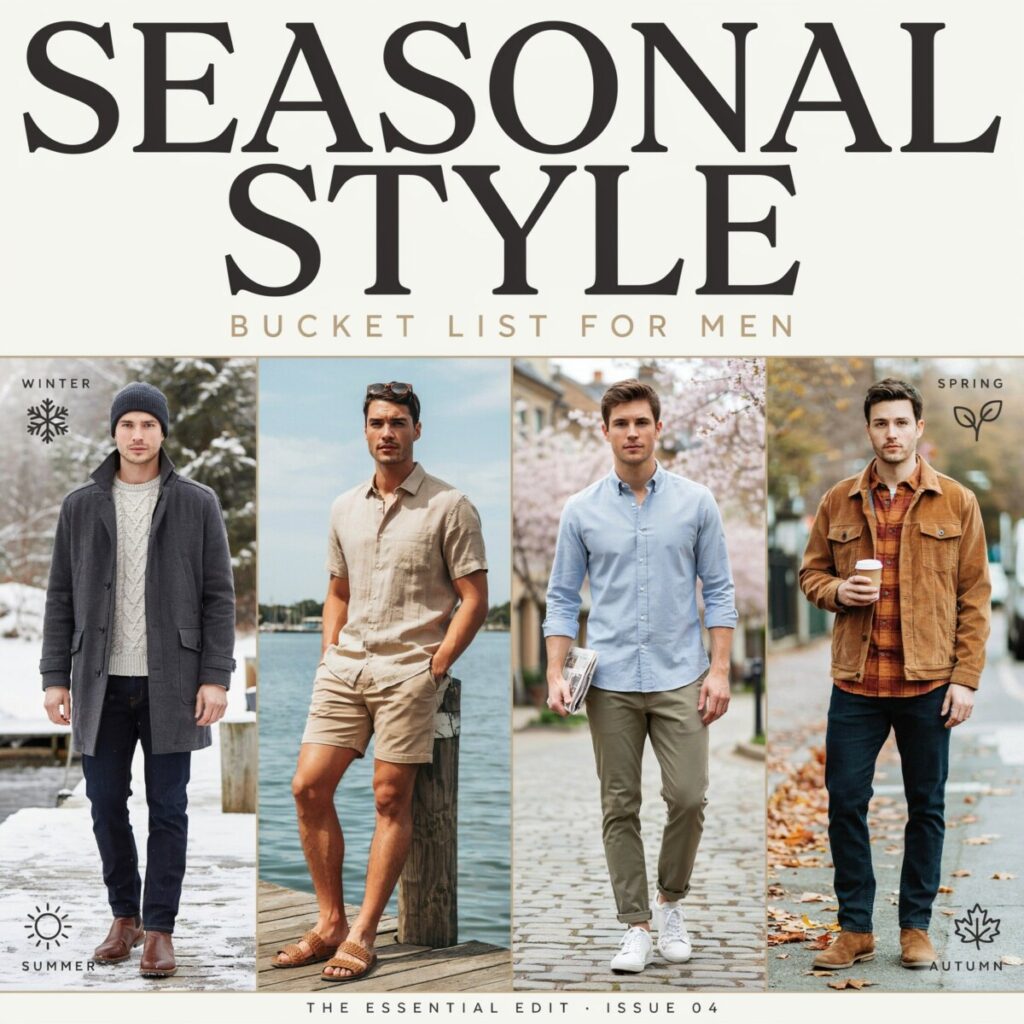
That’s exactly what this guide is built to fix. Below, you’ll find a complete seasonal style bucket list for men: a practical, season-by-season checklist of wardrobe essentials, styling strategies, grooming tips, and outfit formulas that work. Think of it as your year-round fashion roadmap — the kind of plan that helps you walk into any room, any month, looking like you’ve got it all figured out. No fashion degree required. Just smart, intentional choices.
Let’s build your wardrobe, one season at a time.
Why a Seasonal Style Bucket List Matters
Before we dive into fabrics and fits, let’s talk about why this approach works — and why winging it season after season is costing you more than you think.
You save money. When you shop without a plan, you buy reactively — grabbing whatever catches your eye on sale, regardless of whether it fills a gap in your wardrobe. A seasonal style checklist forces intentionality. You stop buying your fifth navy polo and start investing in the lightweight trench coat you’ve actually needed for three years.
You save time. A curated men’s seasonal wardrobe means fewer morning decisions. You know what works together because you planned it that way. This is the foundation of capsule wardrobe thinking — fewer pieces, more combinations, less decision fatigue.
You extend the life of your clothes. Wearing a heavy wool sweater in July or thin cotton chinos in January doesn’t just look off — it wears out garments faster. Weather-appropriate clothing preserves fabrics, maintains fits, and keeps your wardrobe looking fresh longer.
You build confidence. There’s a quiet power in knowing you’re dressed right for the occasion and the temperature. It changes how you carry yourself, how you show up in meetings, dates, and dinners.
And here’s a bonus most guys overlook: sustainable men’s fashion starts with buying less and buying better. A seasonal plan means you’re purchasing with purpose — choosing quality pieces that last multiple seasons rather than chasing fast-fashion trends that fall apart after three washes.
Spring Bucket List: Light Layers and Fresh Starts
Spring is fashion’s reset button. The heavy layers come off, color returns to your palette, and you get to rediscover what’s actually in your closet. But spring weather is notoriously unpredictable — warm one day, rainy the next — which makes layering tips for men absolutely critical during these months.
Here’s your spring men’s fashion bucket list:
1. The Lightweight Trench or Rain Jacket
Why it matters: A well-cut rain jacket is spring’s MVP. It handles April showers, blocks cool morning wind, and instantly elevates a casual outfit.
How to style it:
- Smart casual: Trench over a white Oxford shirt, slim chinos, and clean leather sneakers.
- Weekend ease: Rain jacket layered over a lightweight hoodie, dark jeans, and suede sneakers.
Fabric & fit tips: Look for water-resistant cotton blends or technical nylon with a matte finish (avoid anything too shiny or athletic unless you’re actually running). The jacket should hit mid-thigh and allow a sweater underneath without feeling tight.
Price guidance: Budget ($60–$120) for solid technical options; investment ($200–$400) for heritage-style cotton trenches with better tailoring.
If you only buy one spring item this year, make it this. A good rain jacket gets worn 30+ times a season and photographs beautifully in every outfit.
2. The Linen or Linen-Blend Shirt
Why it matters: Nothing signals “I understand warm weather” quite like linen. It breathes, it drapes beautifully, and it wrinkles in a way that looks intentional and relaxed — not sloppy.
How to style it:
- Date night: White linen shirt, tucked into tailored olive chinos, with brown loafers.
- Casual Saturday: Sky-blue linen shirt, sleeves rolled, over white tee and light-wash jeans.
Fabric & fit tips: Pure linen wrinkles aggressively. A linen-cotton blend (60/40 or 70/30) gives you breathability with less maintenance. Fit should be relaxed through the body — linen doesn’t stretch, so avoid slim fits that pull at the buttons.
Price guidance: $40–$80 for quality blends; $100–$180 for premium European linen.
3. The Lightweight Knit Sweater
Why it matters: Spring mornings are cool, and evenings can drop 15 degrees. A lightweight knit is your transitional layer — warm enough for 55°F, light enough to carry in a bag when the sun comes out.
How to style it:
- Office ready: Fine-gauge merino crew neck over an Oxford shirt, paired with tailored trousers.
- Weekend layer: Textured cotton knit over a white tee with chinos and canvas sneakers.
Fabric & fit tips: Merino wool, cotton, or cotton-silk blends all work beautifully. Avoid heavy cable knits — save those for fall. The sweater should skim your body, not cling or billow.
Price guidance: $50–$90 for cotton; $100–$200 for merino or blends.
4. Cropped or Tailored Chinos
Why it matters: Spring is when you retire the heavy denim and baggy cargos. Tailored chinos in lighter weights and colors refresh your entire silhouette.
How to style it:
- Spring brunch: Sand-colored chinos with a pastel polo and white sneakers.
- Evening out: Navy chinos, light blue Oxford, and brown suede loafers.
Fabric & fit tips: Look for 6–8 oz cotton twill with a slight stretch (1–2% elastane). A tapered leg with a slight crop (hitting just above the ankle bone) looks modern and works with every shoe type.
Price guidance: $40–$70 for solid everyday options; $90–$150 for premium tailoring.
5. Breathable Sneakers
Why it matters: Winter boots are done. Spring calls for shoes that let your feet breathe and complement lighter fabrics.
How to style it:
- Versatile daily: White leather sneakers with chinos and a casual button-down.
- Sporty casual: Knit or mesh sneakers with joggers and a lightweight jacket.
Fabric & fit tips: Leather sneakers are more versatile and polished; textile or knit sneakers are more breathable. Either way, keep them clean — spring’s mud and rain will test you.
Price guidance: $60–$120 for quality leather; $80–$160 for premium knit runners.
6. A Neutral Spring Color Palette
Why it matters: Spring isn’t about buying all new clothes — it’s about editing your palette. Shift from winter’s dark tones to softer, lighter neutrals: stone, sage, sky blue, dusty rose, cream.
Action step: Audit your spring rotation. If more than 70% of your tops are black, navy, or charcoal, you need to add 3–4 lighter pieces this season.
Grooming note for spring: Transition to a lighter fragrance — think citrus, green, or aquatic notes instead of heavy oud or spice. Start exfoliating 2x/week as your skin sheds winter dryness, and add a lightweight SPF moisturizer to your morning routine. Sun protection isn’t just for summer.
Summer Bucket List: Beat the Heat in Style
Summer style is a paradox: you’re wearing less, which means every piece is more visible and more important. There’s nowhere to hide behind layers. This is where summer style essentials men need to work double-time — keeping you cool while looking intentional, not like you just rolled out of bed.
Your seasonal outfits for men in summer live and die by fabric choice. Breathability is everything.
1. Performance Polos and Short-Sleeve Knits
Why it matters: The polo is summer’s workhorse. But not all polos are equal — a cheap, boxy cotton polo looks dated fast. Modern performance polos with moisture-wicking fabrics and tailored fits are a massive upgrade.
How to style it:
- Smart summer evening: Navy performance polo, tailored shorts, leather sandals, and a simple watch.
- Weekend golf or brunch: White piqué polo, slim chinos, and clean sneakers.
Fabric & fit tips: Look for mercerized cotton, pima cotton, or technical polyester blends. The sleeve should hit mid-bicep (not past it), and the body should follow your torso without clinging. Avoid logos — let the fit do the talking.
Price guidance: $35–$70 for quality cotton; $60–$120 for performance blends.
2. Chino Shorts (Tailored, Not Baggy)
Why it matters: Shorts are where most men’s summer style falls apart. The fix is simple: treat shorts like trousers. They should be tailored, hit 2–3 inches above the knee, and have a clean, flat front.
How to style it:
- Casual day: Khaki shorts, white linen shirt (untucked), and espadrilles or canvas sneakers.
- Evening out: Navy shorts, tucked polo, braided belt, and leather loafers.
Fabric & fit tips: Cotton twill or cotton-stretch blends in 7–9 inch inseams. Avoid cargo pockets, excessive branding, and anything that hits below the knee.
Price guidance: $35–$65 for solid options; $80–$130 for premium tailored shorts.
3. Linen Shirts (Yes, Again)
Why it matters: Linen earns a spot in both spring and summer because it’s genuinely the best warm-weather fabric in existence. In summer, you’ll reach for it even more — short-sleeve linen shirts and camp-collar styles become your weekend uniform.
How to style it:
- Beach to bar: Camp-collar linen shirt over a tank or bare chest, swim trunks, and slides.
- Summer dinner: Long-sleeve linen, sleeves rolled to forearm, dark shorts, and loafers.
Pro tip: Pack two linen shirts for any travel-friendly outfits trip. They’re lightweight, resist odors better than synthetics, and look better with a few wrinkles.
4. Boat Shoes, Espadrilles, or Leather Sandals
Why it matters: Your men’s shoe guide by season peaks in summer because footwear variety matters most when you’re showing more ankle. Rotate between two or three styles to keep outfits fresh.
How to style it:
- Boat shoes with chino shorts and a striped tee (classic, preppy).
- Espadrilles with linen trousers and a camp-collar shirt (Mediterranean ease).
- Leather sandals with tailored shorts and a relaxed knit (modern minimalism).
Fabric & fit tips: Leather uppers age beautifully; canvas is more casual and affordable. Break in leather sandals before any long walking days.
Price guidance: $50–$100 for quality leather; $30–$60 for canvas options.
5. Lightweight Sunglasses
Why it matters: Sunglasses are summer’s most impactful accessory. The right pair sharpens your entire look and protects your eyes.
How to choose: Match the frame to your face shape — angular frames for round faces, rounded frames for square faces. Stick to neutral tones (tortoise, black, gold) for maximum versatility.
Price guidance: $30–$80 for solid UV-protective options; $150–$350 for investment designer frames.
6. Moisture-Wicking Underwear and Undershirts
Why it matters: Nobody talks about this, but it’s the foundation of summer comfort. Sweat-through shirts and uncomfortable seams ruin even the best outfit.
Action step: Replace your cotton boxers and undershirts with modal, micro-modal, or performance synthetic blends. They wick moisture, resist odor, and feel invisible under lightweight summer fabrics.
Price guidance: $15–$30 per pair for quality performance underwear. Buy 5–7 pairs and rotate.
7. A Sun Hat or Baseball Cap (Done Right)
Why it matters: Sun protection is non-negotiable, and the right hat adds personality to summer outfits. A structured baseball cap in a neutral color or a natural straw hat for beach/vacation settings.
Styling rule: Keep it simple. Avoid novelty logos, loud patterns, or anything that looks like a souvenir shop impulse buy.
Grooming note for summer: Switch to a mattifying sunscreen for your face (SPF 30+, non-greasy). Keep hair products lightweight — heavy pomades melt in heat. Consider a shorter haircut or textured crop to stay cool. And hydrate — your skin will thank you.
Fall Bucket List: Texture, Tone, and Transition
Fall is menswear’s greatest hits season. The temperatures invite layering strategies, the color palette is inherently rich, and textures like suede, flannel, and wool make every outfit feel considered. This is where your transitional wardrobe men plan pays off — pieces that layer up or down as temperatures swing between 45°F and 70°F.
1. The Transitional Jacket (Chore Jacket, Denim Jacket, or Harrington)
Why it matters: Fall’s opening act belongs to mid-weight jackets. They’re versatile enough to wear alone in September and layer under a coat by November.
How to style it:
- Rugged casual: Denim jacket over a thermal henley, dark jeans, and boots.
- Smart casual: Suede Harrington over an Oxford shirt, chinos, and loafers.
Fabric & fit tips: Cotton canvas, denim (12–14 oz), or suede all work. The jacket should sit at your hip bone and allow one layer underneath without restriction.
Price guidance: $60–$130 for cotton/denim; $150–$300 for suede.
2. Suede Boots (Chelsea or Chukka)
Why it matters: Suede boots fall menswear is a love story for a reason. Suede adds texture, richness, and instant sophistication to almost any outfit. Chelsea boots lean sleek; chukkas lean rugged. Both are essential.
How to style it:
- Date night: Brown suede Chelseas, dark jeans, a charcoal crew-neck sweater, and a wool overcoat.
- Weekend market: Tan chukkas, olive chinos, flannel shirt, and a chore jacket.
Shoe care critical: Suede is fall’s highest-maintenance material. Buy a suede brush, eraser, and waterproofing spray before your first wear. Treat them every two weeks during wet months.
Price guidance: $100–$200 for quality suede; $250–$450 for Goodyear-welted investment boots.
3. Flannel and Heavyweight Oxford Shirts
Why it matters: Fall menswear staples are built on texture, and nothing delivers like a well-made flannel. It’s warm, soft, and layers beautifully under jackets or over tees.
How to style it:
- Layered look: Flannel unbuttoned over a white tee, dark jeans, and boots.
- Office casual: Heavyweight Oxford tucked into chinos with a crew-neck sweater on top.
Fabric & fit tips: Brushed cotton flannel in plaids or solid earth tones. Fit should allow a tee or thermal underneath. Avoid overly busy patterns — one strong flannel outshines five loud ones.
Price guidance: $40–$80 for solid flannels; $90–$160 for premium Japanese or Portuguese fabrics.
4. Dark Denim (Raw or Selvedge)
Why it matters: Fall is dark denim’s season. The deep indigo pairs with every fall color — burgundy, olive, camel, rust — and the heavier weight fabrics (13–16 oz) feel right as temperatures drop.
How to style it:
- Classic fall: Dark selvedge jeans, grey crew-neck sweater, brown boots, and a chore jacket.
- Evening out: Black jeans, white tee, leather jacket, and Chelsea boots.
Fit tip: Straight or slim-straight with a slight taper. Fall jeans should have room for a thermal layer if needed.
5. Scarves and Lightweight Accessories
Why it matters: Men’s seasonal accessories peak in fall. A wool or cashmere-blend scarf adds warmth, color, and a polished finishing touch that separates “dressed” from “dressed well.”
How to style it: Drape a charcoal or camel scarf loosely over a peacoat or chore jacket. Keep patterns minimal — solids or subtle herringbone are most versatile.
Price guidance: $30–$70 for wool blends; $100–$200 for cashmere.
6. Earth-Tone Color Palette
Why it matters: Fall’s palette is nature’s best: olive, rust, camel, burgundy, chocolate, charcoal. These colors mix effortlessly and photograph beautifully.
Action step: If your fall wardrobe is mostly black and navy, add 3–4 pieces in warm earth tones this season. One olive jacket, one camel sweater, and one burgundy accessory will transform your combinations.
Quick outfit recipe for a fall weekend getaway: Dark jeans + thermal henley + flannel (unbuttoned) + chore jacket + suede chukkas + wool beanie. That’s five pieces that create one perfect outfit idea for the season — warm, layered, and effortlessly cool.
Winter Bucket List: Warmth, Structure, and Smart Layers
Winter dressing is an engineering challenge: how do you stay warm without looking like a marshmallow? The answer lies in smart layering tips for men, technical fabrics, and outerwear that’s as functional as it is sharp. Your winter outerwear men selections will define your cold-weather style more than anything else.
1. The Wool Overcoat
Why it matters: A tailored wool overcoat is winter’s most sophisticated piece. It works over suits, sweaters, and even hoodies — bridging formal and casual with ease.
How to style it:
- Business sharp: Camel overcoat, navy suit, leather gloves, and oxford shoes.
- Smart casual: Charcoal overcoat, turtleneck, dark jeans, and leather boots.
Fabric & fit tips: Look for 80%+ wool content with a structured shoulder. Length should hit mid-thigh to just above the knee. The coat must accommodate your bulkiest sweater underneath without pulling at the buttons.
Price guidance: $150–$300 for quality wool blends; $400–$800 for investment Italian or British wool.
2. The Insulated Parka or Puffer
Why it matters: For the coldest days, you need serious insulation. A well-designed parka or puffer keeps you warm at 20°F without sacrificing your silhouette.
How to style it:
- Urban commute: Matte black puffer, merino base layer, dark jeans, and insulated boots.
- Weekend outdoors: Olive parka, heavyweight flannel, thermal layers, and waterproof boots.
Fabric & tech tips: Down insulation (700+ fill power) offers the best warmth-to-weight ratio. Synthetic insulation performs better when wet. Look for a DWR (durable water repellent) finish. Avoid anything overly shiny or technical-looking unless function demands it.
Price guidance: $100–$250 for solid synthetic options; $300–$600 for premium down.
3. Heavyweight Knitwear
Why it matters: Sweater outfit ideas multiply in winter. Cable knits, shawl-collar cardigans, and thick turtlenecks are both functional and stylish — the kind of pieces that make cold weather feel like an opportunity rather than a burden.
How to style it:
- Cozy smart: Shawl-collar cardigan over an Oxford shirt, wool trousers, and leather slippers or boots.
- Layered warmth: Chunky turtleneck under a denim or chore jacket, dark jeans, and beanie.
Fabric tips: Lambswool, shetland wool, and merino are your best bets. Avoid acrylic — it pills, doesn’t breathe, and looks cheap within weeks.
Price guidance: $60–$120 for lambswool; $150–$300 for premium shetland or cashmere blends.
4. Thermal Base Layers
Why it matters: The layer closest to your skin determines your comfort more than any outer layer. Modern thermal base layers are thin, warm, and invisible under clothing.
Action step: Invest in 2–3 merino wool or synthetic base layers (tops and bottoms). They regulate temperature, wick moisture, and resist odor — meaning you can wear them multiple times between washes.
Price guidance: $40–$80 per piece for quality merino; $20–$40 for synthetic alternatives.
5. Leather Boots (Waterproof or Weather-Resistant)
Why it matters: Winter destroys cheap shoes. Invest in leather boots with a rubber lug sole, waterproof construction, and Goodyear welt or Blake stitch for resoling longevity.
How to style it:
- Everyday winter: Brown leather lace-up boots, dark jeans, flannel, and wool overcoat.
- Rugged weekend: Black combat-style boots, cargo pants, heavyweight sweater, and parka.
Care tip: Condition leather monthly during winter. Salt stains from icy sidewalks will crack untreated leather within weeks.
Price guidance: $150–$300 for quality leather boots; $350–$600 for heritage or Goodyear-welted options.
6. Gloves, Beanie, and Cold-Weather Accessories
Why it matters: Extremities lose heat fastest. Leather gloves (touchscreen-compatible, ideally), a merino or cashmere beanie, and a substantial scarf complete your winter armor.
Styling rule: Match leathers — brown gloves with brown boots, black gloves with black shoes. Keep beanies in neutral tones.
Grooming note for winter: Cold air and indoor heating devastate skin. Use a richer moisturizer morning and night, add a hydrating serum, and don’t skip lip balm. Consider a beard oil if you grow facial hair — winter dryness makes beards brittle and itchy.
Year-Round Essentials + Capsule Wardrobe Tips
No matter the season, certain pieces form the backbone of your wardrobe. These are your closet essentials men — the capsule wardrobe checklist items that anchor every seasonal outfit and make your bucket-list pieces actually work together.
Your 10 year-round essentials:
- White crew-neck tee (medium-weight cotton, perfect fit)
- Oxford cloth button-down (white or light blue)
- Dark slim-straight jeans (minimal fading, clean wash)
- Navy blazer (unstructured for versatility)
- Tailored chinos (khaki or navy)
- White leather sneakers (clean, minimal design)
- Leather belt (brown or black, matching your primary shoes)
- Everyday watch (leather or steel strap, clean dial)
- Grey crew-neck sweater (merino or cotton, medium weight)
- Versatile jacket (denim, Harrington, or bomber — your style, your call)
How to build mini-capsules by season: Take these 10 essentials and add 5–8 seasonal pieces from the bucket lists above. That gives you 15–18 items per season, which mix-and-match into 40+ outfits. That’s the power of a capsule wardrobe men system — less clutter, more style, smarter spending.
Adaptation tip: Your white tee works year-round — swap the weight (lightweight in summer, mid-weight in winter). Your blazer layers over a tee in spring and a sweater in fall. Your sneakers rotate with boots and loafers seasonally. The essentials stay; the accents change.
Shopping and Maintenance Checklist
Building a men’s style checklist isn’t a one-weekend project. Here’s how to approach it strategically:
Prioritize by season. Don’t buy winter coats in July. Shop each season’s list 4–6 weeks before you’ll need the pieces. This gives you time to compare options, wait for sales, and get items tailored.
Build gradually. Add 3–5 new pieces per season rather than overhauling everything at once. Your wardrobe should evolve, not reset.
Tailor everything. A $40 shirt tailored for $15 looks better than a $150 shirt off the rack. Budget for alterations on every purchase — especially jackets, trousers, and shirts.
Care for your fabrics. Wash less, air more. Use garment bags for suits and coats. Cedar shoe trees for leather boots. Follow care labels — they exist for a reason.
Seasonal storage: When transitioning between seasons, clean everything before storing. Use breathable garment bags (not plastic). Store boots stuffed with paper and conditioned. Keep wool pieces with cedar blocks to prevent moth damage.
Budget roadmap: Allocate roughly 40% of your annual clothing budget to outerwear and shoes (they last longest and have the most impact), 35% to tops and layers, 15% to bottoms, and 10% to accessories and grooming.
Quick Looks Cheat-Sheet: 10 Outfit Ideas Across All Seasons
- Spring smart casual: Linen shirt + cropped chinos + white sneakers + lightweight trench
- Spring weekend: Lightweight knit over tee + dark jeans + canvas sneakers
- Summer date night: Performance polo + tailored shorts + loafers + sunglasses
- Summer vacation: Camp-collar linen shirt + swim trunks + leather sandals + straw hat
- Fall office: Oxford shirt + flannel layer + dark denim + suede chukkas + chore jacket
- Fall evening: Turtleneck + wool trousers + Chelsea boots + scarf
- Winter business: Merino base layer + dress shirt + navy suit + wool overcoat + leather gloves
- Winter weekend: Thermal henley + heavyweight sweater + dark jeans + parka + insulated boots
- Year-round travel: White tee + blazer + chinos + sneakers + watch (add layers by season)
- Any-season date: Oxford shirt + dark jeans + leather boots + tailored jacket + minimal accessories
Your Move
Here’s the challenge: pick three items from the next season’s bucket list and make them yours. Don’t try to overhaul your entire wardrobe overnight. Start with three intentional purchases, get them tailored, learn to style them, and build from there.
Download our printable seasonal style bucket list [link] to keep in your closet or wallet — a quick-reference guide for every shopping trip. Or sign up for our weekly style newsletter [link] for seasonal outfit ideas, brand recommendations, and exclusive discount codes.
What’s on your style bucket list this season? Drop a comment below — we read every one, and we love seeing how you put these pieces together. Your next great outfit is three smart choices away.
