
We have all been there. You are standing in front of a closet bursting at the seams, hangers tangled, shoes spilling onto the floor, and you think: I have absolutely nothing to wear.
It is a common paradox of modern life. We own more clothing than any generation in history, yet getting dressed in the morning often feels like a stressful chore rather than an act of self-expression. Decision fatigue sets in before you have even had your morning coffee. You end up grabbing the same three outfits on rotation while the rest of your clothes gather dust.
If this sounds familiar, it is time for a change. Learning how to declutter your closet is not just about tidying up; it is about reclaiming your time, your space, and your confidence. By embracing a minimalist wardrobe for men, you strip away the excess and focus on what actually works for your lifestyle.
A streamlined closet eliminates the morning rush, reduces impulse spending, and ensures that every time you walk out the door, you look put-together and feel confident. In this comprehensive guide, we will walk you through exactly how to simplify your style, build a versatile collection of clothes, and maintain a clutter-free space for good.
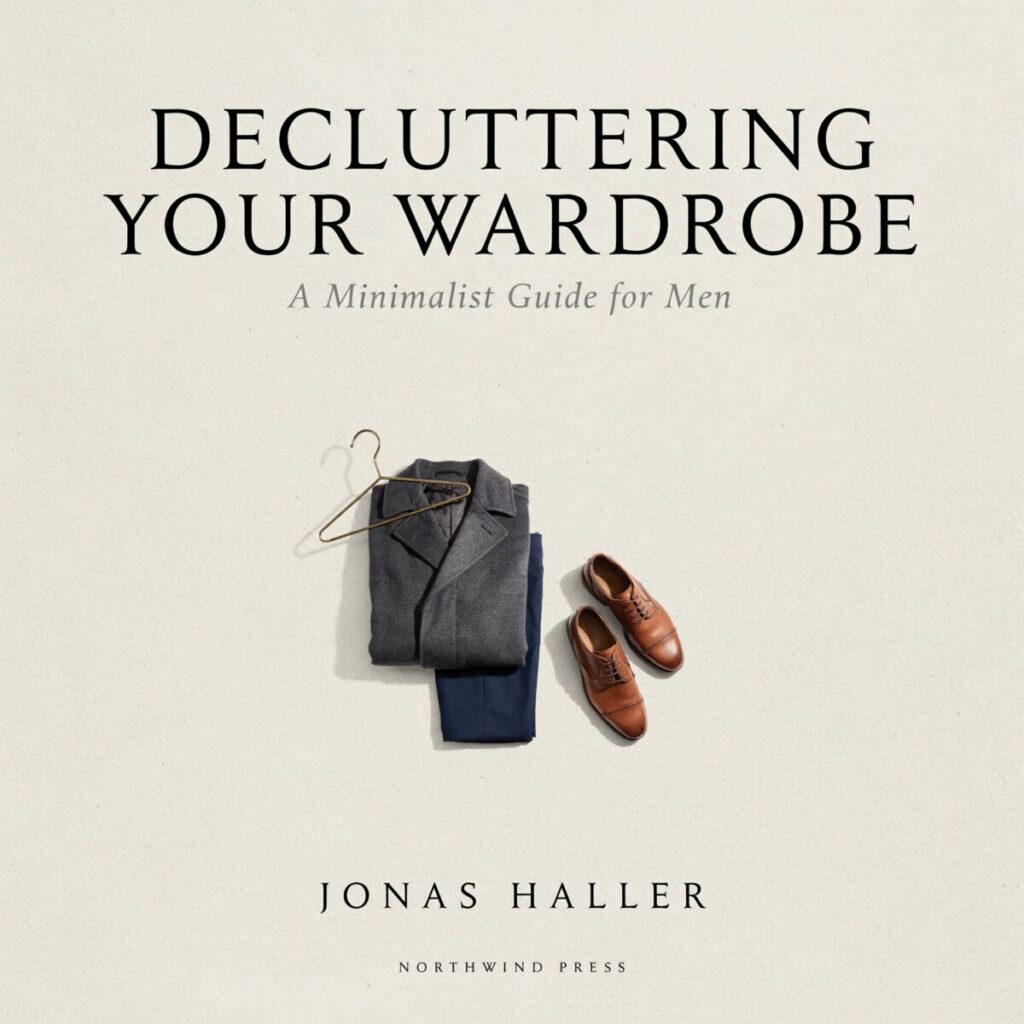
What a Minimalist Wardrobe Is
Before we start pulling clothes off hangers, we need to define what we are aiming for. There is a common misconception that men’s minimalist style means owning exactly ten items of clothing, wearing the same black turtleneck every day, or sacrificing personal flair for the sake of austerity.
That is not minimalism; that is a uniform.
A true minimalist wardrobe is rooted in intentionality. It is the practice of curating a collection of clothing where every single piece serves a purpose, fits perfectly, and brings you confidence. It is about choosing quality over quantity and versatility over fleeting trends.
When you streamline your closet using minimalist principles, you are not depriving yourself. Instead, you are upgrading your daily experience. An overstuffed closet hides your best pieces, wrinkles your fabrics, and makes laundry a nightmare. A minimalist closet, by contrast, looks like a high-end boutique. You can see everything you own at a glance, every item coordinates with the others, and getting dressed becomes a seamless, enjoyable routine.
Ultimately, minimalism in menswear is about removing the friction from your daily life so you can focus on what actually matters—your career, your relationships, and your passions—while still looking exceptionally sharp.
Step-by-Step Decluttering Process
You cannot build a great wardrobe on a shaky foundation. To truly edit your wardrobe, you need to be ruthless, honest, and systematic. Set aside a free Saturday morning, put on a good playlist, and follow this step-by-step process for decluttering clothes.
Step 1: The Complete Empty-Out
Do not just sort through clothes while they are hanging on the rod. Take everything out of your closet, your dresser, and your storage bins. Pile it all on your bed. Seeing the sheer volume of your belongings in one massive heap is a powerful psychological trigger. It immediately highlights how much excess you are holding onto.
Step 2: The Four-Pile Sort
Pick up every single item and make a split-second decision. Sort your clothing into four distinct piles:
- Keep: Items that fit your current body perfectly, are in excellent condition, and that you have worn in the last 60 days.
- Tailor: High-quality pieces that you love but do not fit quite right (e.g., pants that need hemming or shirts that need darting).
- Donate/Sell: Clothes in good condition that simply do not suit your style, lifestyle, or current body.
- Discard: Items with irreversible stains, holes, or severe pilling that cannot be repurposed as rags.
Step 3: The “Fantasy Self” Reality Check
As you sort, beware of the “Fantasy Self.” This is the version of you who plays tennis every weekend, attends black-tie galas twice a month, or plans to drop 20 pounds. If you are keeping a neon tennis polo or a tuxedo you have not worn in five years “just in case,” let it go. Dress for the life you actually live today, not the one you imagine living tomorrow.
Step 4: The Reverse Hanger Trick
For the items you place in the “Keep” pile, put them back in the closet with the hangers facing backward. Over the next three months, every time you wear an item and wash it, hang it back up facing the normal way. After a season, the hangers still facing backward will reveal the dead weight in your closet—the clothes you think you wear, but actually never reach for.
How to Identify Wardrobe Essentials
Once the clutter is gone, you are left with a blank canvas. Now it is time to identify the wardrobe essentials for men that will form the backbone of your daily rotation. The goal is to invest in timeless basics for men that transcend seasonal trends and can be dressed up or down with ease.
Here are the core pillars of a functional, minimalist menswear collection:
The Foundation Tops
- The Perfect White and Grey T-Shirts: Look for mid-weight cotton with a structured crewneck that holds its shape after washing. These are your ultimate layering pieces and standalone warm-weather staples.
- The Oxford Cloth Button-Down (OCBD): A light blue and a crisp white OCBD are non-negotiable. They bridge the gap between casual and formal effortlessly.
- The Merino Wool Sweater: A navy or charcoal crewneck or V-neck sweater regulates temperature, resists odors, and layers beautifully over a collared shirt.
The Core Bottoms
- Dark Wash Selvedge Denim: Skip the heavily distressed, light-wash jeans with excessive logos. A pair of slim-straight, dark indigo jeans is incredibly versatile and can easily pass as smart-casual in most modern workplaces.
- Tailored Chinos: Invest in chinos in versatile earth tones like olive, khaki, or navy. Ensure they have a slight taper and hit right at the shoe without excessive bunching at the ankle.
The Outerwear and Layers
- The Unstructured Blazer: A navy or textured brown blazer without heavy shoulder padding is a secret weapon. It instantly elevates a t-shirt and jeans for a date night or a casual business meeting.
- The Chore Coat or Harrington: For transitional weather, a lightweight cotton or suede jacket adds a rugged, masculine edge to your outfit without looking overly formal.
The Footwear
- Minimalist White Leather Sneakers: Clean, unbranded white sneakers pair with everything from shorts to casual suits.
- Brown Leather Boots or Loafers: A pair of Chelsea boots or penny loafers provides a sophisticated alternative to sneakers when the occasion calls for it.
By focusing on these smart casual basics, you ensure that no matter what you grab in the dark, the pieces will work together harmoniously.
Building a Capsule Wardrobe
Now that you know what essentials to look for, it is time to build a capsule closet. A capsule wardrobe men can rely on typically consists of 30 to 40 interchangeable items (including shoes and outerwear, but excluding gym clothes and underwear) that can be mixed and matched to create dozens of distinct outfits.
The secret to a successful capsule lies in a cohesive color palette. Stick to a base of neutral colors—navy, charcoal, white, grey, and olive. When your colors complement one another, you eliminate the guesswork.
Scenario 1: The “Desk to Dinner” Pivot
Imagine it is a Thursday. You have a full day of remote meetings, followed by a dinner date at a nice restaurant. You do not have time to go home and change.
Because you have built a capsule of versatile clothing for men, your morning outfit is a pair of dark wash denim, a crisp white t-shirt, and clean white leather sneakers. You throw on an unstructured navy chore coat for your morning coffee run.
When 5:00 PM rolls around, you simply swap the white t-shirt for a light blue Oxford button-down, switch the sneakers for brown suede Chelsea boots, and keep the chore coat. In less than two minutes, you have transitioned from a relaxed daytime look to a sharp, intentional evening outfit using the exact same core pieces.
This is the power of a capsule. It is not about restriction; it is about maximizing your options while minimizing your inventory. By curating a tight edit of high-quality pieces, you ensure you are always appropriately dressed, no matter where the day takes you.
Common Mistakes to Avoid
As you transition to a minimalist lifestyle, it is easy to stumble into a few common traps that can quickly sabotage your progress. If you want to successfully reduce wardrobe clutter, keep an eye out for these pitfalls.
1. The Sunk Cost Fallacy
This is the most common reason men hold onto clothes they never wear. You spent $250 on a pair of designer jeans three years ago, but they are uncomfortable and do not fit your current aesthetic. You keep them in the back of the closet because “they were expensive.”
Money spent is gone. Keeping an unworn item does not refund your bank account; it only costs you daily mental energy and physical space. Donate the item, learn from the purchase, and move on.
2. Ignoring the Tailor
Many men buy clothes off the rack and accept a mediocre fit as a given. A $40 t-shirt that is tailored to hug your shoulders and arms perfectly will always look better than a $400 designer shirt that billows around your waist. If you have “Keep” pile items that are slightly too long or boxy, take them to a local tailor. It is the single best investment you can make in your personal style.
3. Chasing Micro-Trends
Fast fashion brands are designed to make you feel like your wardrobe is obsolete every six weeks. Neon colors, extreme silhouettes, and loud logos might look great on a mannequin or an influencer, but they rarely integrate well into a daily rotation. Stick to classic proportions and timeless fabrics. You want your clothes to look good five years from now, not just for the current season.
4. Keeping “House Clothes” in the Main Closet
It is fine to have old sweatpants for painting the garage or mowing the lawn. But do not let them live next to your tailored trousers. Keep utility and lounge wear in a separate drawer or bin so they do not dilute the visual impact of your daily wardrobe.
Organizing the Remaining Wardrobe
Once you have ruthlessly purged and identified your core pieces, you need to know how to organize wardrobe spaces effectively. A well-organized closet protects your investment and makes getting dressed a tactile pleasure.
Upgrade Your Hangers
Throw away the wire hangers from the dry cleaner and the mismatched plastic tubes you have collected over the years. They stretch the shoulders of your shirts and make your closet look chaotic. Invest in a uniform set of slimline velvet hangers for shirts or solid wooden hangers for heavier jackets and suits. Uniformity instantly makes a small closet look high-end and spacious.
Categorize and Color-Code
Group your clothes by category (e.g., button-downs, t-shirts, trousers, jackets) and then arrange them from light to dark within those categories. This not only looks visually calming but also helps you instantly locate what you need.
Master the Folding Technique
Not everything belongs on a hanger. Heavy knits and sweaters should always be folded, as hanging them will cause the shoulders to stretch and develop “hanger bumps.” Denim and heavy chinos can also be folded to save hanging space. Consider using the “file folding” method (folding items into small rectangles and standing them upright in drawers) so you can see every piece at once without digging through a stack.
Utilize Vertical Space and Lighting
Install a second hanging rod if your closet has high ceilings but only one rod. Use the top shelves for out-of-season storage in breathable canvas bins, and the floor for a simple, aligned shoe rack. Finally, if your closet is dark, install motion-sensor LED strip lights. Seeing your clothes clearly and accurately is vital for putting together cohesive outfits.
Maintaining a Minimalist Wardrobe
The hardest part of decluttering is not the initial purge; it is keeping the clutter from creeping back in. To maintain your new, refined lifestyle, you need to adopt a few simple, unbreakable habits.
The “One In, One Out” Rule
This is the golden rule of minimalism. If you buy a new jacket, an old jacket must be donated or sold. If you buy a new pair of sneakers, an old pair leaves the closet. This rule forces you to pause and consider whether the new item is truly an upgrade over what you already own. It naturally caps your wardrobe at its optimal capacity.
The 30-Wears Test
Before purchasing any new item, ask yourself: Will I wear this at least 30 times? If the answer is no, leave it on the rack. This simple mental hurdle prevents impulse buys and ensures that you are only bringing versatile clothing for men into your home—pieces that will earn their keep in your rotation.
Seasonal Audits
Schedule a closet review twice a year: once in the spring and once in the fall. As you transition your seasonal clothes, evaluate what worked and what did not. Did you wear that heavy peacoat, or did you constantly reach for your lighter chore coat instead? Use these bi-annual audits to continuously edit your wardrobe and ensure it evolves with your lifestyle.
Scenario 2: The Mall Temptation
Imagine you are at the mall on a Saturday and see a bright, patterned resort shirt on sale for 40% off. The old you would have bought it, reasoning that it is a “steal,” only to wear it once on a vacation and shove it to the back of the closet.
The minimalist you pauses. You run the 30-Wears Test. You realize it does not match your core neutral trousers. You realize it conflicts with your “One In, One Out” rule—you would have to sacrifice a shirt you actually love to make room for it. You put it back, walk away, and later invest that money into a high-quality leather belt that will last a decade. You have just saved money, space, and future regret.
Conclusion
Learning how to declutter your wardrobe is about much more than just organizing fabric. It is a profound shift in how you present yourself to the world and how you manage your daily energy. By stripping away the excess, you eliminate decision fatigue, save money, and cultivate a personal style that is confident, consistent, and entirely your own.
A minimalist wardrobe for men is not a destination; it is an ongoing practice of intentionality. It is about surrounding yourself only with things that serve you, fit you well, and make you feel like the best version of yourself.
Do not wait for the perfect weekend to start. Grab a trash bag, open your closet doors, and take back your space. Your future self—standing in front of a clean, curated closet, effortlessly picking out a perfect outfit in under a minute—will thank you.
